There was a time when every SEO discussion ended with the same question: "What is your website ranking for?" It used to be successful if a site had made to the number one position in Google results. Higher rankings meant higher visits and higher visits resulted in better business.
That thinking isn't completely wrong today but it isn't enough either.
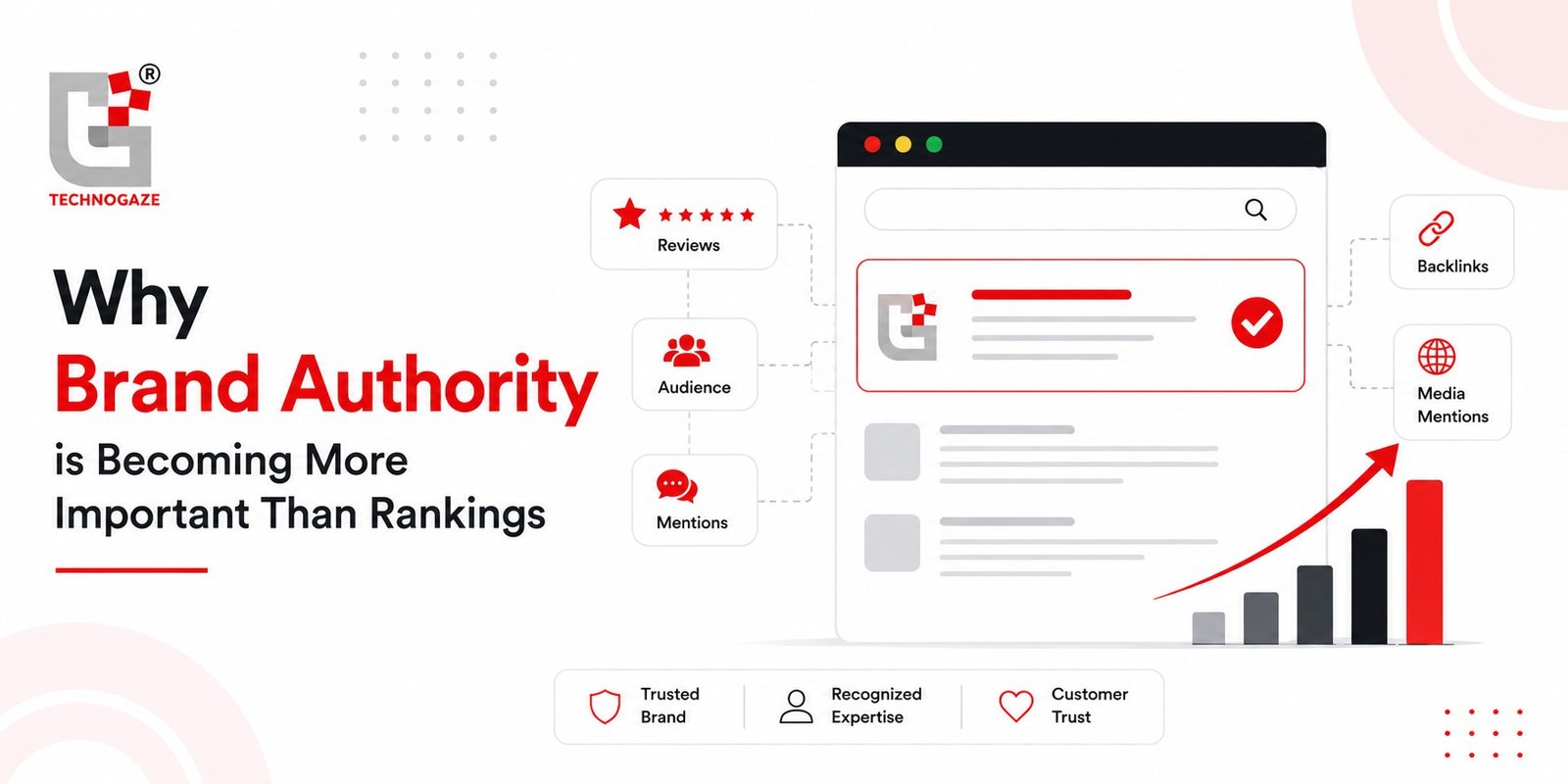
Times have changed and the internet has also evolved. It is no longer easy to win people's confidence just because the business appears on top of search engine results. They spend a little bit more time finding out who they will be dealing with. People look up reviews, go through the website and social media and in some instances even get recommendations from AI-powered search engines before reaching out to the business.
That's where brand authority quietly takes over.
A strong brand doesn't depend only on rankings. It earns trust before the first conversation even begins.
Customers Want Confidence, Not Just Information
Have you ever attempted to search for a service online? Maybe you wanted to find an internet marketing agency, a hotel or even a physician. Would you simply click the first site that appears and book an appointment?
Most people don't.
Rather than that, they consider a few choices. One site seems old fashioned. Another site has only three reviews. Then, they discover a business which has some good blogs, many genuine customer testimonials, active social media pages and an appealing website. Things become easy for them then.
Nothing magical happened there. The brand simply looked more trustworthy.
That's exactly how buying decisions are made today. People are looking for confidence not just information.
Ranking First Doesn't Always Mean Winning
It is common to see most businessmen rejoicing whenever a keyword appears on the first page of Google. This isn’t wrong since SEO will always be an integral part of digital marketing.
However, problems arise when ranking becomes the sole aim.
Assuming you have two businesses providing the same services.
One ranks first in Google searches although the website hasn’t been updated in a long while. Fewer reviews, no online activity and the content of the site appear to be optimized only for search engines.
The other business ranks slightly behind but it does all that the site needs to do in answering customer questions, publishing new content, sharing clients' stories and having hundreds of genuine reviews.
Which one feels more reliable?
For most people, the answer is obvious.
Being visible is important but being believable is even more important.
People Research Before They Buy
Buying behaviour has changed more than many businesses realise.
Earlier, customers searched for a product, visited a website and often made a quick decision.
Today, they investigate.
A customer might begin with Google Search, then check Google Reviews, browse Instagram, visit LinkedIn, watch a few videos, compare competitors and finally return to your website before making an enquiry.
Some people don't even stop there. They ask ChatGPT or other AI search tools to explain which companies have the best reputation.
This means your website is no longer your only first impression.
Everything connected to your business contributes to the image people build in their minds.
AI Search Is Looking Beyond Keywords
Artificial intelligence is changing search in ways that many businesses are only beginning to notice.
Instead of showing a long list of websites, AI tools are trying to provide direct answers. They gather information from trusted sources, compare different websites and summarise what appears to be the most reliable information.
That's an important shift.
Simply repeating keywords on a webpage isn't enough anymore. AI systems are becoming better at identifying businesses that regularly publish useful content, maintain consistent information and build genuine credibility online.
In simple words, authority is becoming part of visibility.
The businesses that share knowledge instead of only selling services are likely to stay ahead.
Useful Content Builds Trust Over Time
One blog won't make your brand an authority.
Neither will ten.
Authority grows little by little.
Someone reads your article today because they're searching for an answer. They don't contact you immediately but they remember your website because the information was practical and easy to understand.
A month later, they search for another topic and land on your website again.
After reading a few more articles, your business starts feeling familiar.
That's how trust begins.
The most common mistake that companies do when it comes to blogging is using the platform as an opportunity to use keywords. The readers can tell right away if the information presented is just marketing.
People value the fact that they can learn from what they read or be educated on a matter.
Those are the articles they remember.
Reviews Speak Louder Than Marketing
Every business claim to offer quality service.
Customers know that.
That's why they pay more attention to what previous clients have to say.
A detailed review describing someone's real experience carries much more weight than a headline saying, "We are the best."
Good reviews don't just influence potential customers. They also strengthen your online reputation across different platforms.
Even the way you respond matters.
Thanking happy customers and replying politely to criticism shows that your business values relationships instead of simply collecting ratings.
Sometimes a simple answer leaves a better impression than a five-star rating.
Consistency Makes a Brand Memorable
Trust is not established by a successful marketing campaign.
Trust is built on consistency.
Your website, Google Business Profile, LinkedIn account, YouTube channel and social media profiles should all be saying the same thing.
Designs can vary a little bit but there will still be familiarity in the experience.
The repeated use of relevant content and professionalism in communication leads people to know who you are.
Recognition turns into familiarity.
Familiarity slowly turns into trust.
That's how authority grows.
Expertise Should Be Shared, Not Hidden
Many companies are rich in experience; however, their website does not show it at all.
This is a waste of potential.
Your customers do not know what kind of knowledge you possess; you have to prove it to them.
Answer common questions.
Write about problems your customers face every day.
Share lessons you've learned while working with clients.
Explain industry updates in simple language.
You don't need complicated words to sound like an expert.
In fact, the businesses people trust the most usually explain difficult topics in the easiest way possible.
That's real expertise.
Strong Brands Don't Panic Over Algorithm Updates
When there is a new algorithm change by Google, millions of sites undergo changes in their rankings.
While some companies tend to panic because of the loss in traffic, others keep on receiving inquiries even with ranking changes.
Why?
Because people already know them.
Customers search directly for their business name, recommend them to friends and return whenever they need the service again.
This is probably the greatest benefit of brand authority.
Rather than depending on your rankings, you establish yourself as a company people will seek out.
This puts you at a great advantage.
Final Thoughts
SEO will always matter. Good rankings help new customers discover your business and no company should ignore that. But believing only on rankings is becoming a risky strategy.
The present-day customer is better aware of his choices and is knowledgeable, as well as having high expectations from a business. Customer expects sincerity and expertise from the business. They will not remember you just because your website was ranked #1 for a certain keyword.
Authority does not happen overnight nor is there an easy way about it. It develops every time you release something valuable, communicate truthfully with your customers, fix their problems or give them an excellent experience.
Rankings may bring people to your website.
Trust is what makes them stay, enquire and come back again.
And in the long run, that's what helps a business grow.
Author Bio:
Sadhana Patidar is a Senior SEO Executive at Technogaze Solutions with more than five years of experience in technical, on-page, off-page and local campaigns. She holds expertise in optimizing websites to increase visibility, correcting any technical problems and driving organic traffic through data-informed methodologies. Sadhana is passionate about realistic SEO strategies that produce ongoing results, after combining data elements with practical tactics of optimization. Her expertise includes detailed audits, optimizing content, blog writing and website content writing, developing link-building campaigns that boost online presence. Passionate about learning and development, Sadhana actively looks for current search engine optimization trends to ensure each engagement is reflective of the best search engine optimizations and competes well across digital platforms