Summary:
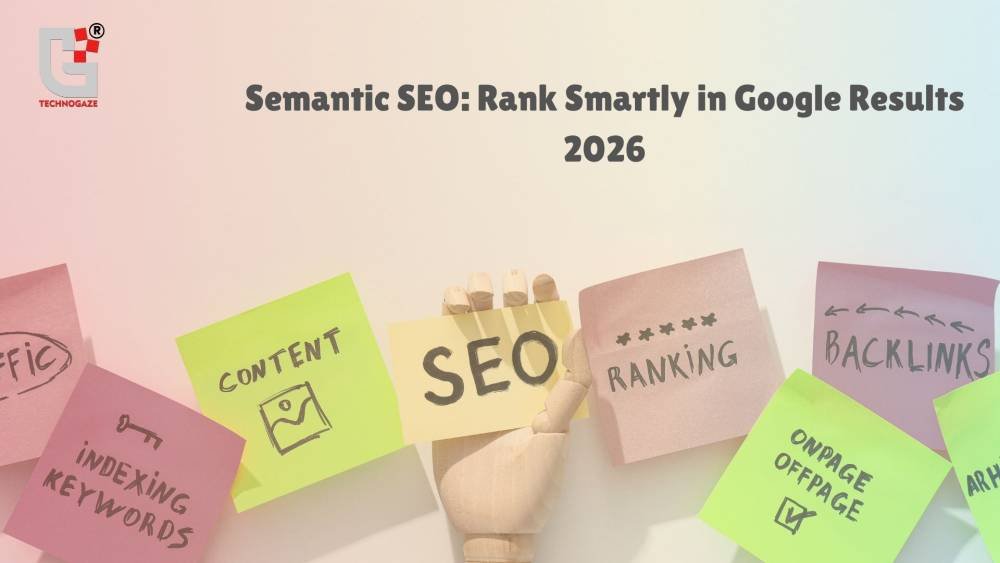
Semantic SEO is all about optimizing content for meaning, intent, and context rather than just exact keywords like in the early days of SEO. By understanding what users really want, marketers can create content that ranks naturally on the search engines, answers questions, and builds authority for your websites. From semantic keywords to structured internal linking, semantic SEO transforms digital marketing strategies nowadays.
The Evolution of Semantic SEO — From Keywords to Intent
In the early days of SEO, ranking was simple: repeat your keyword enough times, add some links, and hope Google noticed you, and you will rank on the first page. For example, a blog about digital marketing tips would just use that exact phrase over and over, and it would rank.
But Google noticed users don’t think in keywords — they think in terms of questions and problems:
“How can I improve my social media ROI this quarter?”
With his algorithm updates, Google had progressed not just to understand words, but to understand intent behind the whole content. That’s when semantic search became important.
Hummingbird (2013): Shifted focus from exact words to meaning in the content. A query like “best email marketing tools for small businesses” would rank pages discussing tools, features, and use cases—even if the exact phrase wasn’t repeated many times.
RankBrain (2015): RankBrain is a Google AI-based system that helps the search engine understand the meaning and context behind the users queries rather than just matching exact keywords in the content. It uses machine learning to interpret new or complex searches and delivers results that best match user intent, dwell time & click rate.
BERT (2019): Helped Google understand context within sentences. For example, “how to create ads targeting young audiences” now returned pages focused on ad strategy rather than general marketing.
MUM (2021): Extended understanding across languages and media, so even video tutorials could contribute to search relevance.
Each update made Google smarter, focusing on meaning and human intent rather than literal keyword matches in his early starting days . Today, semantic SEO allows digital marketers to create content that answers real questions, solves problems, and ranks naturally on the SERP.
What Is Semantic SEO?
Semantic SEO is the art of creating content that search engines can truly understand. It’s not about stuffing a keyword like “digital marketing” 20 times in the content —it’s about helping Google see what you actually mean.
For example, if your page is about email marketing, semantic SEO ensures you naturally include connected ideas like:
Email automation tools
Campaign segmentation
A/B testing
Open-rate optimization
These aren’t just extra keywords—they’re semantic keywords that show depth and relevance of your content. Instead of ranking for one keyword like “email marketing,” you can rank for multiple related searches like “best email marketing tools” or “how automation helps conversions.”
What Is a Semantic Search Engine?
A semantic search engine just not match the words in a query. Instead, it tries to understand intent behind it.
For example, if a user searches “how to find semantic keywords for a digital marketing blog,” Google knows what they are looking for, A strategy to discover related terms, not just a list of words.
Semantic search engines use AI, NLP (Natural Language Processing), and knowledge graphs to map relationships between ideas. This is why when you search “best PPC strategy,” Google also shows results for “paid ads,” “Google Ads campaigns,” and “ROI optimization.”
How the Semantic Search Engine Algorithm Works
Behind every query, Google runs a complex semantic search algorithm. In real time, it:
Understands intent—does the user want to learn, compare, or buy?
Identifies entities like “PPC,” “content marketing,” or “Google Ads.”
Compare the meaning of your content to the query, not just word matches.
Evaluates user signals—if readers engage and stay, your content moves up.
For instance, if your blog on “content marketing trends” includes connected ideas like “AI content,” “video strategy,” and “SEO integration,” Google sees it as comprehensive because it understands the semantic field of content marketing.
Semantic Optimization
Semantic optimization is creating and structuring content to match the meaning behind user searches—not just stuffing the exact keywords in the content.
By implementing semantic optimization, marketers can:
Improve search engine rankings by signaling topic authority
Enhance user engagement with content that fully answers queries
Build trust and topical authority in their niche
Example: Instead of targeting only the keyword “digital marketing trends,” a semantically optimized article covers SEO updates, social media strategies, AI tools, and content marketing techniques to address broader intent.
Key Components of Semantic Optimization
Keyword Clustering: Group related keywords and topics, e.g., “digital marketing” with “SEO strategy,” “content marketing,” “social media marketing.”
Topic Coverage: Cover related subtopics to show authority. Example: a blog on SEO should discuss on-page, off-page, technical SEO, and common mistakes.
LSI & Semantic Keywords: Include terms that reinforce the main topic. For “digital marketing,” use “PPC campaigns,” “email marketing,” and “analytics tools.”
Natural Language & User Intent: Write conversationally, aligned with how people search. Use questions like “How can I improve my SEO in 2025?”
Internal Linking & Content Clusters: Link related articles together to help search engines understand topic relationships and improve site structure.
How to Find Semantic Keywords
Finding semantic keywords is all about understanding how people think, what they search for, and the topics related to your main idea or Topic .
Steps:
Start with your main topic, e.g., “digital marketing strategy.”
Think about your audience’s problems or questions:
How do I improve social media ROI?
Which tools help automate email campaigns?
What are the latest SEO trends for small businesses?
Explore related searches and tools:
Google Autocomplete & “People Also Ask”
Keyword tools like Ahrefs, Semrush, Ubersuggest
AnswerThePublic for common questions and comparisons
Expand your semantic keyword pool with related terms, entities, and subtopics:
“content automation tools”
“email marketing campaigns”
“social media scheduling”
“SEO content planning”
The SEO Sandwich Technique for Marketers
The SEO sandwich helps structure content for readers and search engines:
Top slice (beginning): Introduce your main idea naturally.
Example: “Social media marketing helps small businesses grow their audience and boost sales.”Middle (meat): Deliver value, insights, or examples without keyword stuffing.
Share practical tips—scheduling posts, creating engaging content, or using hashtags effectively.Bottom slice (end): Reinforce the main idea and close with a takeaway.
Example: “By planning posts strategically and engaging your audience, your social media marketing efforts can bring consistent growth.”
Why Semantic SEO Matters for Digital Marketers
In a world dominated by AI tools, voice search, and chat assistants, semantic SEO ensures your marketing content gets found by users.
Benefits:
More organic visibility for campaign pages
Stronger authority in niche topics
Better performance in Google’s contextual ranking
Long-term growth unaffected by keyword-only updates
Semantic SEO isn’t the future—it’s the present standard by Google .
Conclusion:
Semantic SEO transforms content creation. It’s no longer about chasing a single keyword—it’s about creating meaning, linking ideas, and serving user intent. By mastering semantic optimization, using semantic keywords, and structuring content with pillars and clusters, you build a digital ecosystem that Google trusts and users value.
Next time you write a blog or landing page, ask not “What keyword should I rank for?” but “What does my audience really mean?”
Frequently Asked Questions (FAQ)
Q1: What is Semantic SEO?
A: Optimizing content for meaning and user intent rather than exact keywords.
Q2: How do I find semantic keywords for digital marketing?
A: Start with a main keyword and use tools like Google PAA, Ahrefs, or Semrush to find related terms, grouped by topic.
Q3: What is a semantic search engine?
A: A search engine that understands intent and meaning, not just words, delivering relevant results.
Q4: What is semantic optimization?
A: Using semantic keywords and related concepts naturally to improve relevance and search engine understanding.
Q5: What is semantic & entity-based SEO?
A: Linking entities like brands, tools, or concepts meaningfully to build topical authority.
Q6: How do I group semantic keywords?
A: Organize by intent or subtopics, linking to a central pillar page to show comprehensive coverage.
Q7: What is the SEO sandwich technique?
A: Structuring content with an intro (top), main value (middle), and takeaway (bottom) for readability and clarity.
Author Bio
Ketan Kathane is an SEO Executive at Technogaze Solutions with 1.6 years of hands-on experience in search engine optimization, content strategy, and digital marketing. Passionate about helping businesses improve their online visibility, Ketan specializes in crafting SEO-friendly strategies that drive traffic, engagement, and conversions. He keeps up with the latest trends in SEO and digital marketing to ensure businesses stay ahead in the competitive online landscape.