Search is changing quickly. Humans are not simply typing keywords into Google to open websites and analyse multiple pages. They are increasingly turning to AI systems with specific questions and receiving informative responses.
AI based search tools such as ChatGPT, Gemini and Google AI search experiences are revolutionizing the way humans find information, businesses and products. The result is a whole new possibility of making content visible to these AI search engines.
While regular SEO techniques are still crucial today, businesses have to consider much more than search rankings and clicks. The content must be easily accessible to search engines, reliable enough to be used as references and useful to answer users' questions.
This is when AI Search Optimization, AEO and GEO become relevant.
What is AI Search?
AI search refers to search experiences where artificial intelligence helps understand a user's question, collects information from different sources and provides a more direct answer.
Traditional search usually presents a list of links. AI based search is capable of summarizing information and giving a conversational response, complete with source links.
For instance, ChatGPT Search can perform a web search and give answers with links to supporting sources. OpenAI says that websites can be found in ChatGPT Search and publishers have the option of allowing AI Search Bot to crawl their website.
This means your website is no longer competing only for a position on a traditional search results page. Your content may also need to become a useful source for AI generated answers.
SEO vs AEO vs GEO
The terms SEO, AEO and GEO are often used together but they have slightly different focuses.
SEO
Search Engine Optimization
SEO focuses on improving a website's visibility in traditional search engines. It includes technical SEO, keyword research, on-page optimization, content, internal linking, backlinks and user experience.
AEO
Answer Engine Optimization
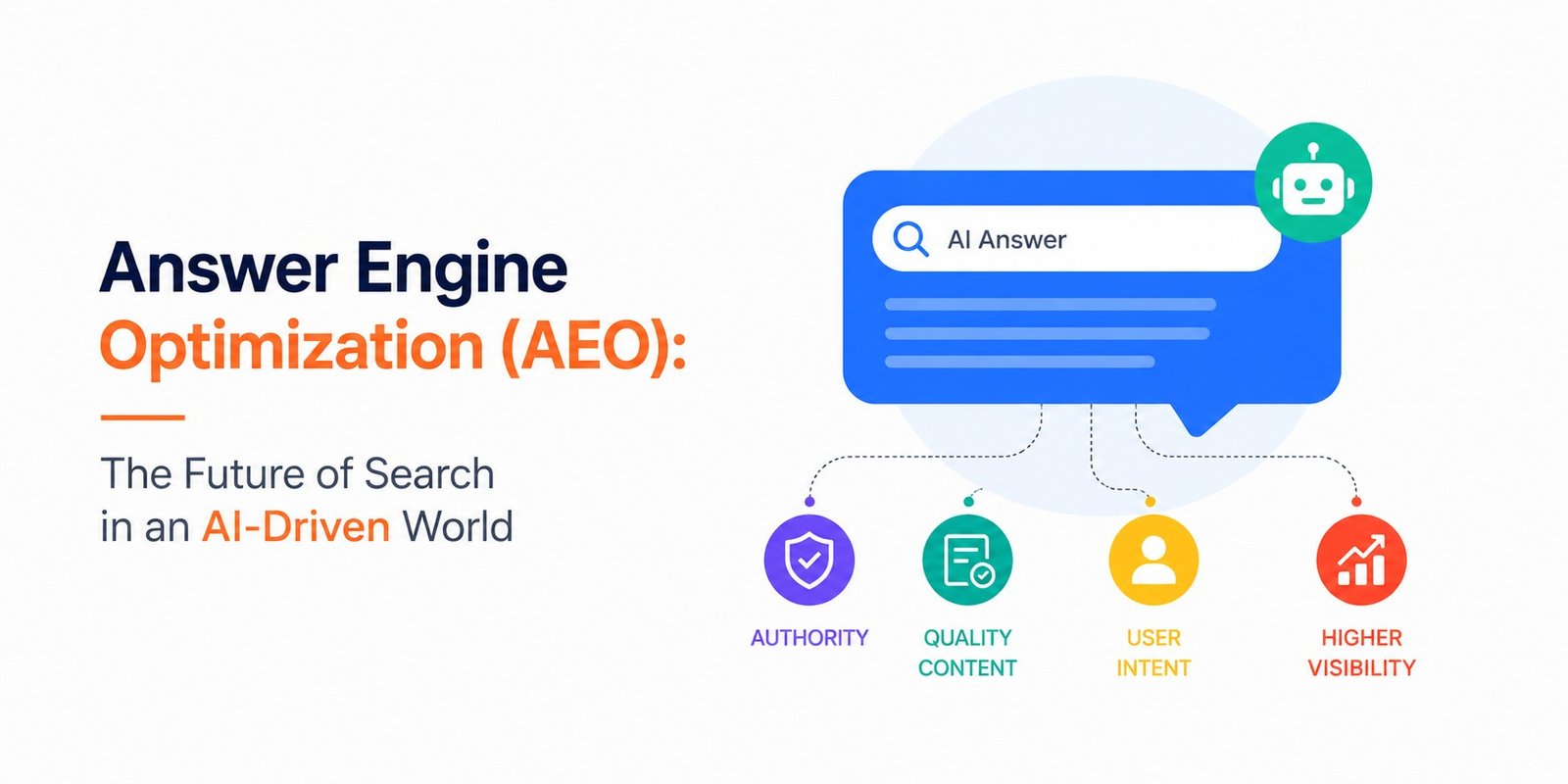
AEO focuses on creating content that directly answers questions. The objective here is to make the information easily comprehensible for the answer engines and the search systems.
GEO
Generative Engine Optimization
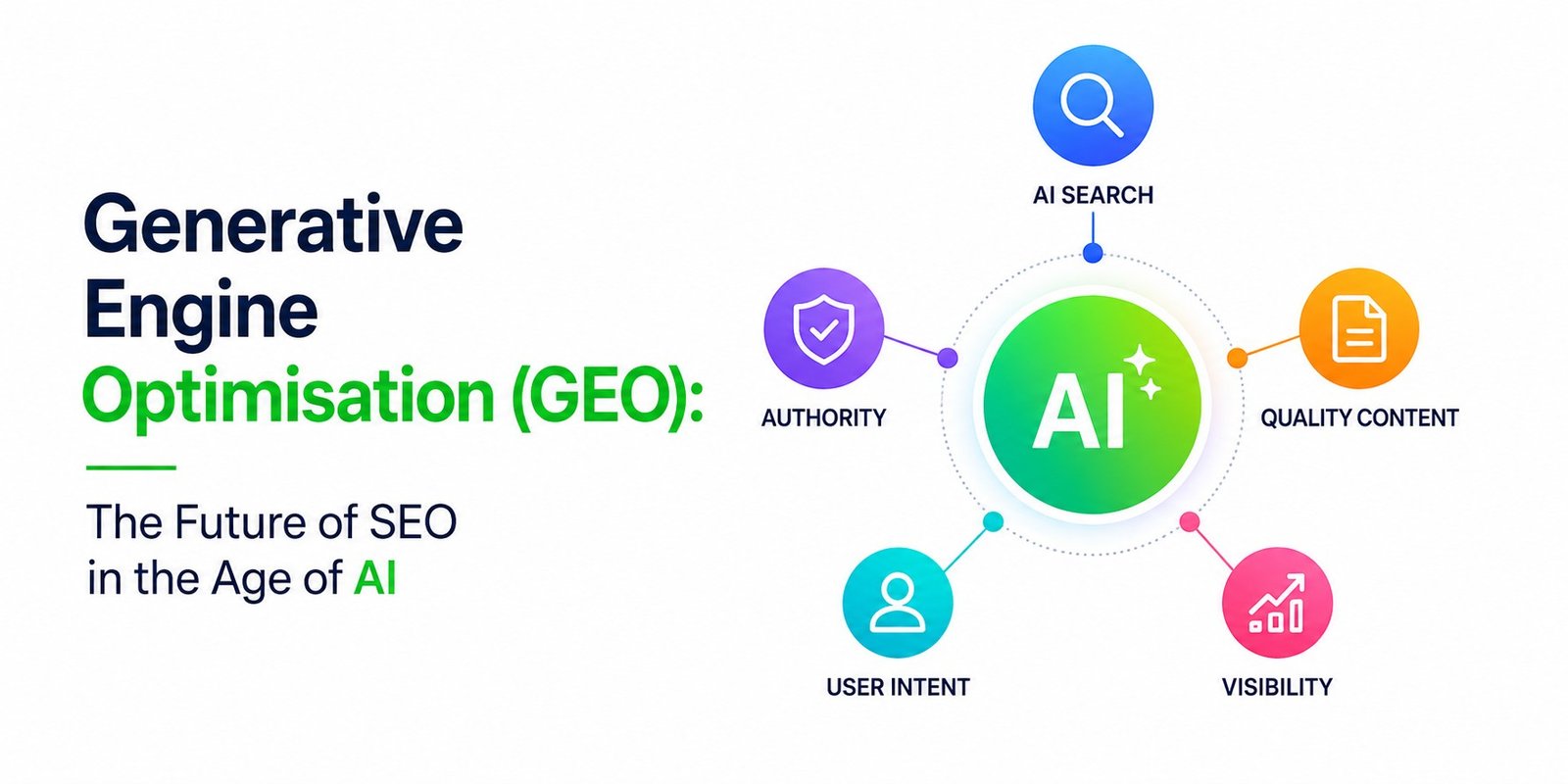
GEO focuses on improving the chances of your content being understood, selected or referenced by generative AI systems.
For instance, rather than stating merely that:
"Digital marketing is crucial for companies."
A better way would be to answer a question like:
"What are the advantages of digital marketing for a small company?"
The three approaches should not be treated as replacements for each other. A strong website strategy combines traditional SEO with answer focused and AI search friendly content.
How to Make Your Website Visible in AI Search
There is no guaranteed formula for appearing in every AI generated answer. AI systems use multiple signals and the exact selection process can change.
However, you can make your website significantly easier to discover, understand and trust.
1
Create Helpful, Original Content
The foundation is still good content.
Don't create articles simply to insert keywords. Create content that solves a real problem for your target audience.
For example, instead of writing a generic article about SEO, create useful topics such as:
- How to improve local SEO for a small business
- How to optimize a website for AI search
- SEO mistakes that reduce organic visibility
- How to measure SEO performance
- How businesses can use AI for content marketing
Every article should have a clear purpose.
Ask yourself: If a customer reads this article, will they actually learn something useful?
If the answer is yes, you are moving in the right direction.
2
Answer Questions Clearly
AI search works particularly well with questions.
Your content should cover the questions your customers are actually asking.
Use headings such as:
- What is AI Search?
- How does ChatGPT Search work?
- How can I optimize my website for AI search?
- Does SEO still matter in 2026?
- What is the difference between AEO and GEO?
Give the answer near the beginning of each section and then explain it in more detail.
This structure helps both users and search systems understand the page.
3
Build Strong Topical Authority
Publishing one article about a subject is usually not enough to establish strong topical coverage.
Suppose your website focuses on digital marketing. Instead of publishing random marketing articles, create connected content around major subjects.
For SEO, you could cover:
- Keyword research
- Technical SEO
- On-page SEO
- Local SEO
- Link building
- Content optimization
- SEO analytics
- AI SEO
Then connect these articles using relevant internal links.
This creates a content network where individual pages support one another.
A website that consistently demonstrates knowledge across a subject can provide stronger context than a website with a collection of unrelated articles.
4
Use Natural Language and Relevant Entities
Don't write for robots.
Write the way your audience actually speaks and searches.
If your topic is "digital marketing for restaurants," naturally discuss relevant concepts such as local SEO, Google Business Profile, reviews, social media marketing, online advertising, content marketing and customer acquisition.
This gives search systems more context about your subject.
Avoid excessive keyword repetition. Using the same keyword in every paragraph can make content difficult to read and does not automatically make it more valuable.
5
Strengthen E-E-A-T Signals
Trust matters when people are deciding whether to believe information.
Google's search ecosystem places importance on experience, expertise, authoritativeness and trustworthiness. Your website should therefore make it clear who is creating the content and why the information can be trusted.
Consider adding:
- Author information
- Relevant professional experience
- About page
- Contact information
- Business information
- Original research
- Case studies
- Data and examples
- References where appropriate
- Updated publication dates
For business websites, real world experience can make content more useful than generic information generated without practical knowledge.
6
Make Your Website Technically Strong
AI search optimization does not mean ignoring technical SEO.
Your website should be easy for crawlers to access and understand.
Check important technical areas such as:
- Mobile responsiveness
- Page speed
- Core Web Vitals
- HTTPS
- XML sitemap
- Robots.txt
- Proper indexing
- Canonical URLs
- Internal links
- Structured data
- Clean URL structure
- Image optimization
A technically weak website can create problems even when the content itself is excellent.
For ChatGPT Search specifically, OpenAI's publisher guidance says websites should avoid blocking AI Search Bot if they want their content to be discoverable, surfaced and clearly cited or linked in ChatGPT Search.
7
Use Structured Data Where Appropriate
Structured data helps communicate what information on a webpage represents.
Depending on your page, relevant schema types may include:
- Article
- Organization
- Local Business
- Product
- Service
- FAQ
- Breadcrumb
- Course
- Review
The structured data should provide the right reflection of what is displayed on the page.
This must not be used to provide any false information.
For instance, the course page may provide some information regarding the course, while the organization page will provide information regarding the business.
8
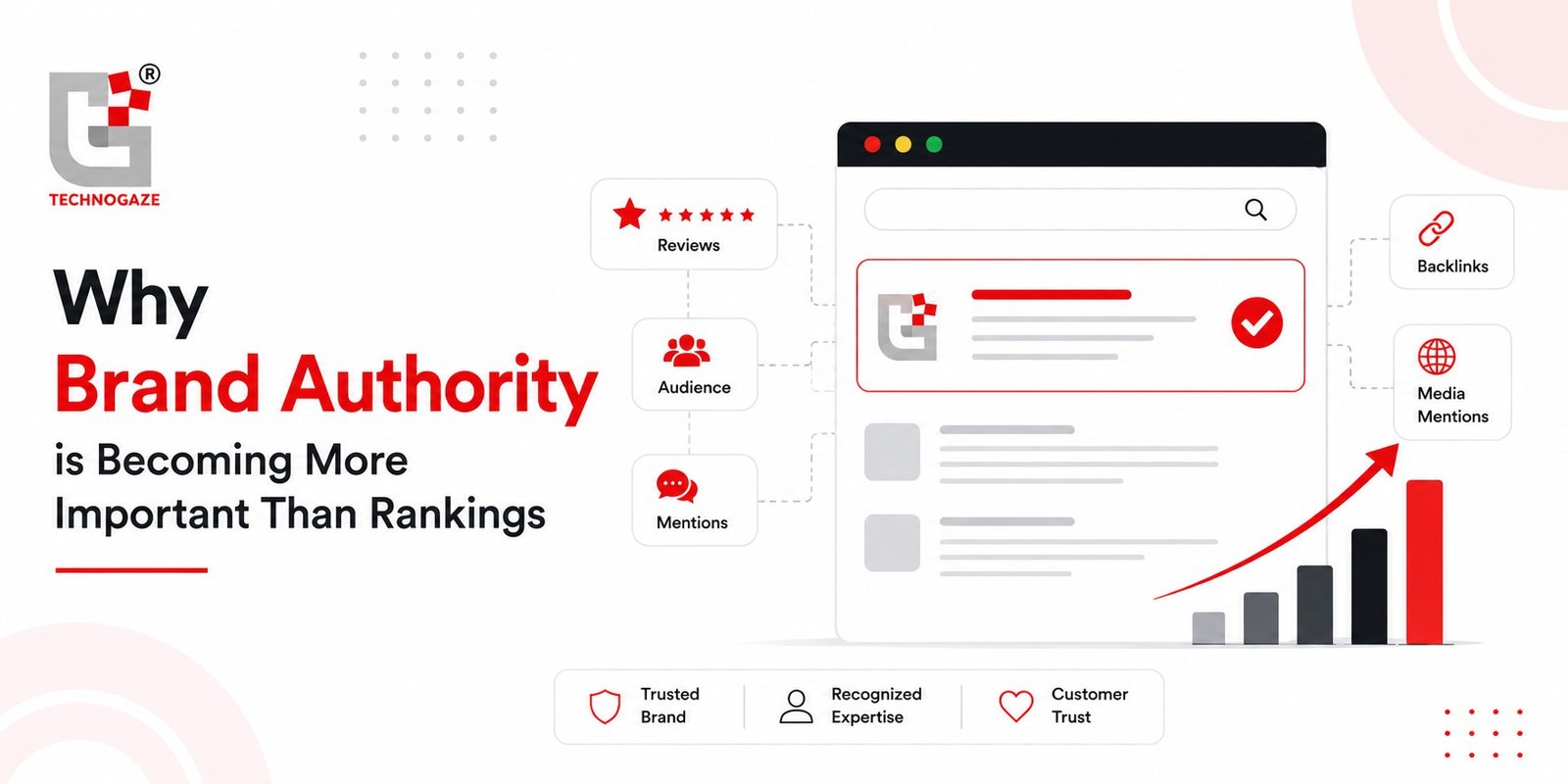
Create Real Authority and Quality Backlinks
Backlinks continue to play an important role in SEO due to the fact that these help the search engine know about the authority of the site.
However, the emphasis should always be on quality rather than on quantity.
Just a couple of relevant backlinks from credible websites will be more helpful than many irrelevant backlinks.
Good opportunities may include:
- Industry publications
- Relevant business directories
- Guest contributions
- Digital PR
- Industry partnerships
- Original research
- Expert interviews
- Useful resources that naturally attract references
Avoid building backlinks only for the purpose of manipulating rankings.
9
Keep Important Content Updated
AI search and traditional search both operate in an environment where information changes.
Statistics become outdated. Tools change. Platforms introduce new features. Marketing strategies evolve.
Review important pages regularly.
Update:
- Statistics
- Screenshots
- Examples
- Tools
- Platform features
- Links
- Industry information
- Outdated recommendations
An updated article can provide much more value than an old article that has not been reviewed for years.
10
Make Your Brand Easy to Understand
Your website should clearly communicate:
Who are you?
What do you do?
Who do you serve?
Where do you operate?
Why should people trust you?
For example, a digital marketing business should have clear service pages for areas such as SEO, social media marketing, paid advertising, website development, content marketing and branding.
The homepage, service pages, blogs and company information should all communicate a consistent identity.
TechnoGaze presents itself as a full service digital marketing and technology partner, with services including SEO, PPC, social media marketing, website development, branding and content strategy.
11
Create Content for Humans First
One of the biggest mistakes businesses can make with AI search optimization is creating content only because they want to appear in AI results.
Don't forget the actual customer.
A person may discover your website through Google, ChatGPT, Gemini, social media or a referral. Once they arrive, they need to understand your information quickly.
Use:
- Short paragraphs
- Clear headings
- Simple language
- Examples
- Lists
- Tables when useful
- Original insights
- Strong calls to action
Good user experience should remain at the centre of your content strategy.
How to Measure AI Search Visibility
Measuring AI visibility is still different from traditional SEO reporting.
Don't look only at keyword rankings.
Track a broader set of signals:
- Organic traffic
- Branded searches
- Referral traffic
- Leads
- Conversions
- Engagement
- Search impressions
- Search queries
- Mentions of your brand
- AI referral traffic where available
- Pages receiving organic visibility
However, OpenAI's Publisher Guidance points out that any website enabling access to AI Search Bot will be able to analyse the referral traffic from ChatGPT via services like Google Analytics.
In this way, analytics become crucial for businesses as they seek to comprehend the source of website visitors.
Common AI Search Optimization Mistakes
Here is a list of mistakes to avoid:
- Keyword stuffing: Too many keywords will result in very unnatural content.
- Thin content: Small, useless articles hardly give anyone a good reason to stay.
- Content duplication: Copying and editing other people's articles doesn't allow you to be special.
- Neglecting technical SEO: Quality content does not save bad crawling or indexing of your site.
- Lack of expertise: Your content might lack professionalism.
- Creating content only for AI: Your ultimate audience is still people.
- Ignoring existing SEO: AI search does not mean traditional SEO has suddenly become irrelevant.
The Future of Search is About Being Useful
Search is becoming increasingly conversational and AI-driven but the fundamental idea is clear: Be useful, credible and understandable.
AI search optimization shouldn't be thought of as an entirely different approach from SEO for companies. It needs to be incorporated into a wider digital marketing strategy.
Build technically sound websites. Publish genuinely helpful content. Answer real questions. Demonstrate expertise. Strengthen authority. Keep information updated. Your business communications should be coherent and consistent.
First and foremost, you need to create materials that people would really want to read, refer to and share.
In contrast to many other companies, TechnoGaze is built on the principle of multi-channel digital development which includes strategy, creativity, technology and performance marketing.
Conclusion
However, being found on ChatGPT, Gemini and Google AI through search is not something that depends on just finding out the right trick or adding some AI related keywords to your site.
This means creating a website that is easily discovered, understood and trusted by search engines while offering true value to your customers.
SEO forms the basis for that. AEO helps you answer specific questions clearly. GEO helps you think about visibility within generative search experiences.
The companies that begin to adapt themselves at this point will be able to create quality content, strong websites and high levels of authority even before AI search becomes even more important in the process of discovery.
If you want to succeed digitally in the long run, don't worry about "hacking" AI search. Just be a good source of information. That is the strategy most likely to remain valuable as search continues to evolve.
For businesses looking to build a stronger online presence, TechnoGaze combines SEO, content, paid advertising, social media, web development and other digital services to create a more complete growth strategy.
SP
Written by
Sadhana Patidar
Senior SEO Executive, TechnoGaze Solutions
Sadhana Patidar is a Senior SEO Executive at Technogaze Solutions with more than five years of experience in technical, on-page, off-page and local campaigns. She holds expertise in optimizing websites to increase visibility, correcting any technical problems and driving organic traffic through data-informed methodologies. Sadhana is passionate about realistic SEO strategies that produce ongoing results, after combining data elements with practical tactics of optimization. Her expertise includes detailed audits, optimizing content, blog writing and website content writing, developing link-building campaigns that boost online presence. Passionate about learning and development, Sadhana actively looks for current search engine optimization trends to ensure each engagement is reflective of the best search engine optimizations and competes well across digital platforms.