How Google’s AI Search (SGE) is Changing SEO in 2026
-

- April 16, 2026
- 15 min Read

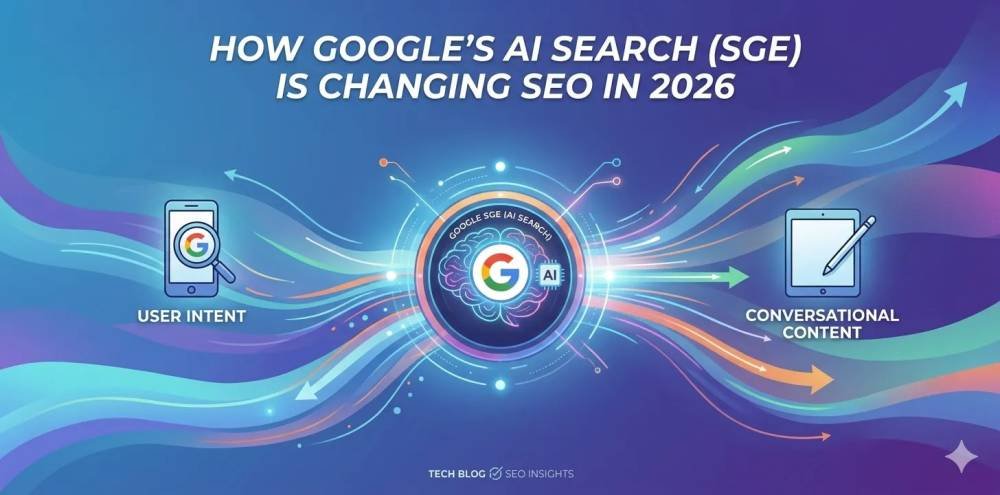
Google’s Search Generative Experience (SGE) has brought changes in the way the results appear and can be interacted with by the end-user. Rather than simply offering links to sites containing information needed, Google now provides direct answers through AI-generated summaries.
These changes have affected the SEO approach in many ways. In the past, getting to the first page was all that mattered for traffic. In 2026, getting into AI answers would carry the same importance.
What is Google SGE
SGE is a function of AI technology that formulates answers using data from multiple websites on the internet. In case a user makes a search for something, Google may come up with a full summary as an answer, followed by some links for verification purposes.
For example, when a user asks “SEO tactics for small business”, Google will come up with the whole answer before scrolling through other websites.
The fewer sites that users click on, the more it affects organic traffic.
Organic Traffic is Becoming More Selective
One of the major changes after SGE is the decline in clicks for general informational searches.
Users now:
• Read the AI summary
• Get their answer quickly
• Leave without visiting any site
Earlier, even basic informational blogs could generate traffic. Now, only content that adds extra clarity or depth gets clicks.
This means websites need to focus less on volume traffic and more on relevant traffic that leads to action.
Visibility Matters More Than Rankings Alone
Ranking on Google is still important, but it is no longer the only goal.
Now there are two levels of visibility:
1. Appearing in traditional search results
2. Being included in AI-generated summaries
If your content is used in SGE responses, your brand gets exposure even if users don’t click immediately.
This is why SEO strategies are shifting toward content usefulness and credibility, not just ranking positions.
Content Quality Standards Are Higher
SGE believes on content that is clear, accurate and useful. Low-quality or repeat content is usually ignored.
Content that performs better now basically includes:
• Straightforward explanations
• Practical information instead of generic text
• Updated data or real examples
• Clear answers to specific queries
Content that struggles includes:
• Keyword-heavy writing without depth
• Rewritten versions of existing articles
• Long introductions with little value
Search engines are better at identifying whether a page actually helps the user or not.
Structure is Now a Key Ranking Factor
Well-structured content has a higher chance of being picked by AI systems.
Pages should be easy to scan and understand. This includes:
• Clear headings and subheadings
• Short, readable paragraphs
• Sections that answer specific questions
• FAQ blocks where relevant
When content is organized properly, it becomes easier for Google to extract useful parts and include them in summaries.
Shift from Keywords to Intent
Keywords are still used, but focusing only on them is not enough.
The focus has moved toward search intent, meaning what the user actually wants to know.
For example, a user searching SEO services in Bhopal is not just looking for a definition. They may want:
• Pricing details
• Service scope
• Expected results
• Timeline
Content should address these points instead of repeating the same keyword multiple times.
Authority and Trust Are More Important
SGE prefers content from sources that appear reliable. This includes websites with consistent publishing, clear service offerings and real-world credibility.
Building authority now involves:
• Publishing useful content regularly
• Showcasing actual work or case studies
• Maintaining clear and updated website pages
• Getting mentions or references online
For a digital marketing agency, this means focusing on long-term credibility rather than quick ranking gains.
AEO is Becoming Part of SEO
Answer Engine Optimization (AEO) is now closely connected with SEO.
Instead of writing content only to rank, the focus is also on providing direct answers that search engines can use.
For example:
• Define terms clearly in the first few lines
• Break down processes step by step
• Answer common questions directly
This approach increases the chances of being included in AI-generated results.
Local SEO is Also Changing
Local search behavior is evolving with SGE.
Users may now see summarized information about services, reviews and businesses before clicking any website.
To stay relevant, local businesses should focus on:
• Keeping their Google Business Profile updated
• Collecting genuine customer reviews
• Creating location-specific service pages
• Providing clear and accurate service details
For agencies working in competitive markets, including those offering SEO services, this shift requires more focus on content clarity and local relevance.
Fewer Clicks but Better Leads
Although traffic numbers may decrease, the quality of visitors is improving.
Users who click after reading AI summaries usually:
• Have a clearer understanding of what they need
• Are comparing options
• Are closer to making a decision
This means conversion rates can improve if the website provides clear and practical information.
Instead of focusing only on traffic, businesses should track:
• Leads
• Inquiries
• Actual conversions
Technical SEO Still Supports Everything
Even with AI-driven changes, technical SEO remains important.
Key areas include:
• Website speed
• Mobile usability
• Proper indexing
• Clean URL structure
• Use of structured data
Schema markup, especially for FAQs and business details, helps search engines understand content better and improves visibility in both traditional and AI-driven results.
What Businesses Should Focus on Now
SEO in 2026 is more about clarity and usefulness than volume.
A practical approach includes:
• Writing content based on real user queries
• Keeping language simple and direct
• Avoiding unnecessary length or filler content
• Updating existing pages regularly
• Building credibility over time
TechnoGaze focus on structured, user-focused content are better positioned to adapt to these changes.
Conclusion
Google’s SGE has changed how users interact with search results, but it has not removed the need for SEO. It has made expectations clearer.
Content needs to be:
• Useful
• Well-structured
• Focused on real queries
• Backed by credibility
The number of clicks may decrease however, each click will be a high quality click. Companies who implement this change will continue to have excellent results but companies using old SEO techniques will have a difficult time continuing to exist.
The direction is clear: create content that answers real questions in a simple and practical way. This applies equally to human and artificial intelligence search engines.
Sadhana Patidar is a Senior SEO Executive at Technogaze Solutions with more than five years of experience in technical, on-page, off-page, and local campaigns. She holds expertise in optimizing websites to increase visibility, correcting any technical problems, and driving organic traffic through data-informed methodologies. Sadhana is passionate about realistic SEO strategies that produce ongoing results, after combining data elements with practical tactics of optimization. Her expertise includes detailed audits, optimizing content, blog writing, and website content writing, developing link-building campaigns that boost online presence. Passionate about learning and development, Sadhana actively looks for current search engine optimization trends to ensure each engagement is reflective of the best search engine optimizations and competes well across digital platforms.

How a Social Media Marketing Agency Helps You Get Real Leads
February 13, 2026